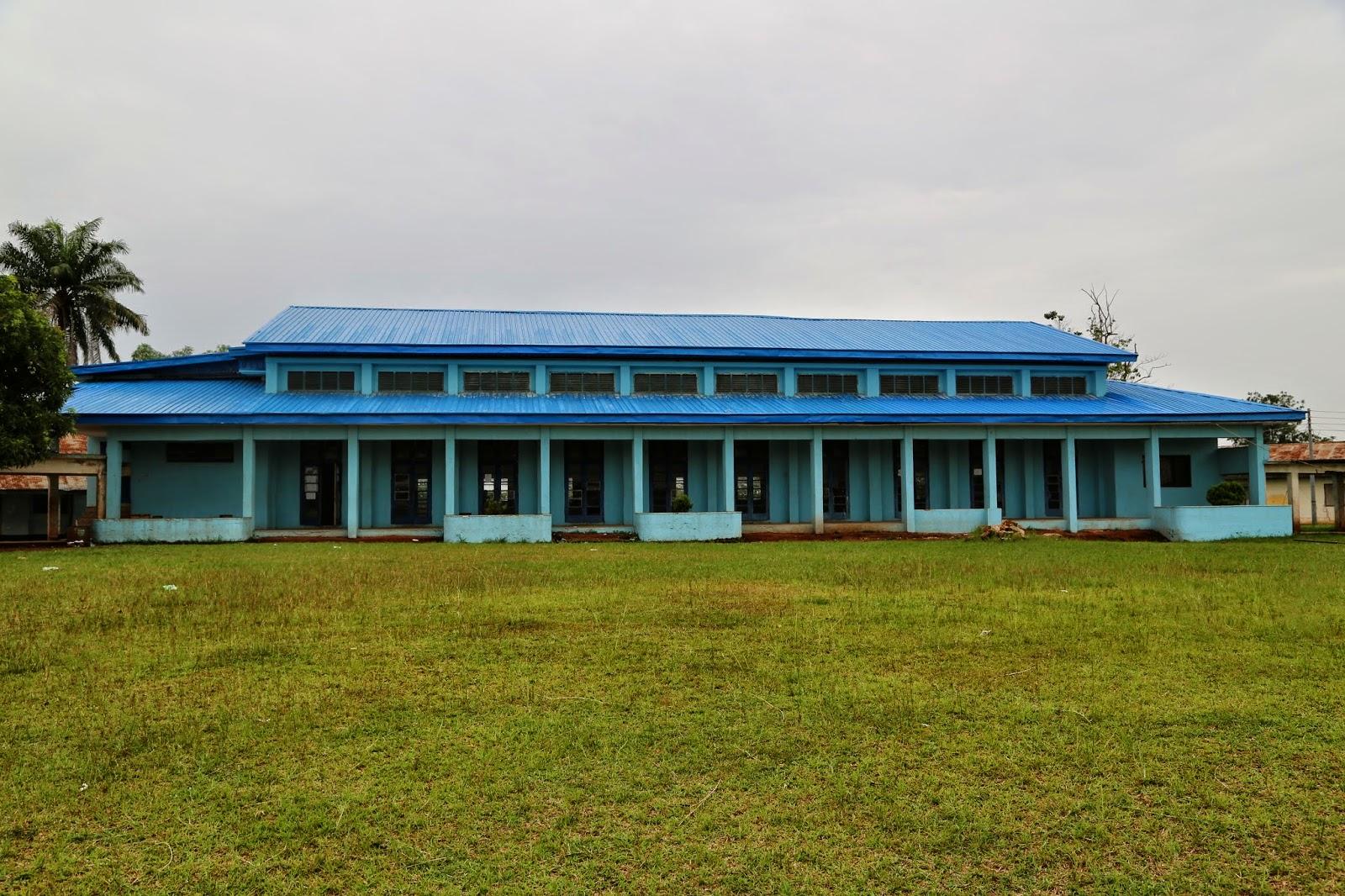
About Government College Umuahia
Government College Umuahia is a public Secondary school, offering Nigerian curriculum, with boarding facilities, (boys-only) located in Umuahia North, Abia, Nigeria.
The Story of Government College Umuahia
Founded on a legacy of dedicated leadership, excellence, and an exceptional academic record. Government College Umuahia (GCU) was founded from a great need for quality education and sustained by acts of conviction and faith, the first of which was demonstrated by its founder, Rev. Robert Fisher – who envisioned building a great school and leaving a lasting legacy in Nigeria. The pioneer principal, the Reverend Robert William Fisher, an English educator, mathematician, and Anglican priest, was commissioned by the British colonial government to establish the Umuahia Teacher Training College. In 1930, the school was converted to a secondary school – Government College Umuahia – modelled after the British public schools of that era. After a decade of service at GCU, Rev. Fisher retired and returned to England, where he served as Vicar of the Anglican Church of St Mary’s in Tottenham. Rev Fisher left his assets to GCU, and The Fisher Educational Development Trust is named in honour of his legacy. When Mr. Wareham took over as principal in 1955, he started dine-in-hall, where he invited senior boys to have a three-course meal. In the sixties, it was the tradition for Nigerian heads of government and governors of the states that ran GCU to visit the school and join the students at dinner. In 1961, the Governor-General of Nigeria, Dr. Nnamdi Azikiwe, and the Premier of Eastern Nigeria Dr. M.I. Okpara, visited GCU. The last official visit by a Nigerian Head of State was General Yakubu Gowon’s visit in 1971. Mr. Wareham also started an officer cadet corps that offered instruction camps in field drills and adventure training. Thirty-three years after its founding, GCU’s first Nigerian principal, Mr. Isaac Dagogo Erekosima, an old boy and mathematics teacher during the tenures of Simpson, Cozens and Wareham, was appointed the school’s first African principal in 1962. A keen sportsman, Mr. Erekosima was admitted in 1930 when GCU became a secondary school. In addition to committed principals, GCU has a heritage of excellent teachers keen on equipping their students with the academic and social skills they need to thrive in GCU and in the world outside GCU.
Academic Programs & Excellence
The College has drawn students from among the best performing in Nigeria and the Southern Cameroons. Its students are recorded as consistently achieving high scores in O-Level and A-Level examinations, and all students complete core courses in the Arts and Sciences. Mr. William Simpson, a mathematics graduate from Kings College, Cambridge and an avid sportsman, was GCU’s principal from 1944 -1951. Mr. Simpson enlarged GCU’s science-oriented curriculum to include liberal arts subjects. During his tenure, Chinua Achebe, Christian Chike Momah, Christopher Okigbo, Chukwuemeka Ike, and Elechi Amadi, who would all go on to become literary elites in their generation, were admitted to GCU. In recognition of his dedication, Mr. Simpson was awarded an OBE (Officer of the Order of the British Empire) by the British government in 1951 and given a coronation medal to mark the coronation of Queen Elizabeth II in 1953. Other exceptional teachers included Mr. A.J Carpenter, who wrote the West African Nature Study. Mr. E.H Duckworth introduced scientific fieldwork into the curriculum and edited the Nigeria Magazine, a respected arts publication. Mr. Charles W. Low (BA Cantab, MA Melbourne) was Assistant Principal, cricket master, and English and Literature teacher at GCU from 1946 to 1953. He also taught Christian Religious Knowledge and informal Latin classes during his tenure. Mr. Low was one of the pillars of GCU’s literary culture. He introduced creative writing in GCU and was the founding editor of The Government College, Umuahia Magazine. The drama club, of which he was patron, produced The Mikado – an opera by Arthur Sullivan and W. S. Gilbert. Mr. Low also gave the school its motto – In Unum Luceant. At various times, the school and its students have obtained the best performance in Nigeria in school certificate examinations. Government College Umuahia (GCU) founded in 1929 by Robert Fisher and recently acquired from the government by the Old Boys and managed by a team of reputable Old Boys known as the Fisher Educational Development Trust (FEDT) is an all boys, world class residential secondary school located in Umuahia, Abia State. GCU (as it is called) offers a combination of the British and Nigerian curricula with a focus on excellence. The school runs a STEAM (Science, Technology, Engineering and Mathematics) focused curriculum whilst not disparaging the Art and Humanities. We are poised at educating students to become world leaders who can innovate and solve 21st century challenges.
Campus & World-Class Facilities
Discover GOVERNMENT COLLEGE UMUAHIA in Umuahia, Abia, Nigeria— offering Sports Facilities, Study Hall, Art Room, Library, Science Lab, Computer Lab, Dormitory, Cafeteria, Meeting Room for students. Call +2347061814154/+2349060203678/+2349131056805 or visit https://gcu.sch.ng/ / https://www.facebook.com/p/Government-College-Umuahia-100066350906987/ / https://ng.linkedin.com/school/government-college-umuahia/ or email [email protected] / [email protected] .
Life at Government College Umuahia
Reverend Robert Fisher opened the gates of the College on 29 January 1929 to 25 students drawn from Nigeria and other parts of West Africa, with a catchment in Eastern Nigeria and the Southern Cameroons. The College began as a teacher-training institute. On 4 July 1940 the College was closed and its campus used as an internment camp for Germans and Italians captured in the Cameroons, despite strong local protest. Some students were sent to King’s College, Lagos; the rest were distributed to mission schools around the region. The colonial Education Department reopened the College, admitting 19 students to King’s College as Umuahia Form I, with 20 more the following year. Students take part in sports including cricket, hockey, handball and football. Facilities recorded for the College include the Upper and Lower fields, cricket pavilions, seven lawn tennis courts, a basketball court and an Olympic-size track. In January 1929, GCU welcomed its first class of twenty-five students. For a decade till his retirement in 1939, Rev. Fisher worked tirelessly, building GCU, shaping its philosophy of excellence in scholarship and sports and moulding the first set of GCU boys who would serve as beacons for succeeding generations. Mr. Simpson was succeeded by Mr. Arthur Barry Cozens, who co-authored the text “Biology for Tropical Schools” with Mr. R. H. Stone, the biology teacher. The text was used by students throughout West Africa. GCU’s current faculty are all highly qualified and experienced teachers committed to their students’ academic success. From its inception, GCU has attracted the best and brightest students and nurtured them to excel in academics, arts and sports. When the University College, Ibadan, Nigeria’s first university, opened in 1948, GCU had more entrants than any other secondary school. The school has produced a significant number of winners of the Nigeria National Merit Award, more than any other secondary school in the country. GCU had expansive sporting facilities, dedicated coaches, and excellent sportsmen. During GCU’s first decade, Rev Fisher started athletics and football competitions for schools in Eastern Nigeria. GCU boys regularly won laurels in athletics, hockey, football, and cricket. Like all elite secondary schools in pre-colonial Nigeria, GCU had a formidable cricket team. Several GCU boys, including Ako Amadi, A.B.C. Nwosisi, Namse Eno, Thompson Iloabachie, Kelsey Harrison, and Eben Spiff, went on to play cricket for Nigeria. The school also produced captains of the Nigerian hockey and cricket teams.
Key Information
- School Type
- public
- Curriculum
- Nigerian
- Levels Offered
- Secondary
- Student Type
- Boarding & Day
- Gender
- boys only
Learn more about Government College Umuahia from these trusted sources:
- 1
- 2
- 3
- 4