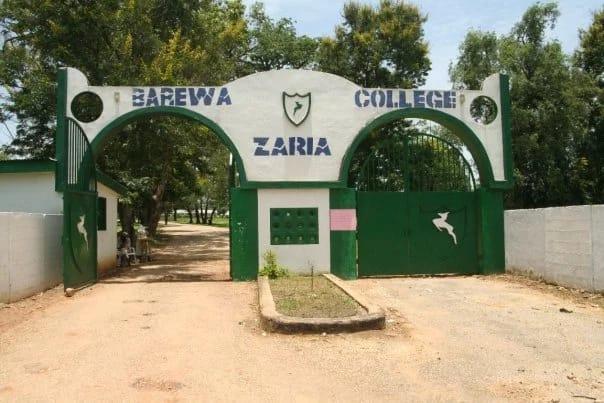
About Barewa College
Barewa College is a federal Secondary school, offering Nigerian curriculum, with boarding facilities, (boys-only) located in Zaria, Kaduna, Nigeria.
The Story of Barewa College
Between 1931-1937 none of the College’s Principals had as much impact on the College as Mr. G.A. J. Bieneman had. Bieneman was the first principal of the school and was significant in planting the Eton tradition at Katsina Teachers College. The substantive Principals, Trevor S. Phillips (1931-1934), William E. Nicholson (1934-1935) and Eric Mort (1935-1946) were all among the senior officers who joined the department before World War 1. As part of Hussey’s plans, a new site for the College was also in the thinking. He preferred building a new school at Zaria to expanding the Training College. Katsina, he thought, was too remote. The new Higher College ought to be in the limelight, since Zaria had already the Medical, Agricultural, Public Works Railway, departments that had facilities at Zaria, there will be ease of interdepartmental cooperation. Hussey’s plans for the Zaria Higher College would require expenditure of up to £53,000 over three years beginning 1931-32. However, because of the Depression, Nigeria revenue plunged below £5,000,000. Barewa College: History of a School and the Nation traces the origins, pedagogical foundations and development of a school that helped expand education in Northern Nigeria and shaped the leadership class of the federation. It captures the vision of its founders, the turns in its institutional evolution, and the practical ways in which Barewa became a cornerstone of political and social advancement. To read Barewa is to read Nigeria through the history of a college; to understand the college fully is to place it within the history of the nation it helped to serve. This is a profound work of institutional history for old boys, Nigerians and students of history everywhere. Barewa College, one of the largest boarding schools in Nigeria, was founded by the British colonial government in 1921. This was during the leadership of Sir. Hugh Clifford, who was the Governor-General at that time. The name of the school has undergone several changes before the name, Barewa College was retained in 1971. It was originally called Kastina Training College, then the name was changed to Kaduna College when the school moved to Kaduna. The school was later moved to Zaria as the name was changed to Zaria Secondary School. Later it was also called Government College, Zaria. As the school hits the milestone of 100 years, drums would be rolled for the school’s centenary celebration. The Centenary Lecture would be delivered by an alumni, Nigeria’s former Head of State, General Yakubu Gowon.
Academic Programs & Excellence
Barewa College Zaria shall be a center of Excellence; second to none in Academics, Discipline and strict compliance to norms and values. Few secondary schools anywhere in the world have produced five heads of state and such a large body of political, administrative, military and business leaders for their country. In Nigeria, and indeed across Africa, Barewa College, Zaria occupies a rare historical position. Its story is not only the story of a school. It is the story of how education, leadership and national formation converged in one institution over the course of a century. 1970s–1990s : Experienced several reforms and infrastructural developments, maintaining its reputation as a premier secondary institution. The college follows the Nigerian secondary school curriculum, offering both junior and senior secondary education leading to the West African Senior School Certificate (WASSCE) and the National Examination Council (NECO) examinations. Academic subjects include the sciences, humanities, and technical subjects in line with national standards. Reputation Barewa College is widely regarded as one of Nigeria’s most distinguished secondary schools, known for its historic role in educating many of the country’s leaders and its emphasis on academic excellence and character development. A leadership pipeline rooted in discipline, academics, and tradition. Review Barewa’s science tradition, leadership modules, and updated curriculum. About Barewa College Zaria Contact Information Reviews & Ratings Request Admission Information At a Glance Barewa College Zaria is a secondary school profile in Zaria, Kaduna , compiled from a public business listing and from anything the school has added itself. This page covers waec support, boarding, discipline, university readiness , contact details, fees where they are on file, reviews, ratings, ownership, location and how to request admission information. Secondary school signals for parents comparing WAEC support, discipline, boarding, and university readiness. Prepare questions for Barewa College Zaria : current fees, admission deadline, entrance requirements, boarding, transport, academic support, safety, and payment schedule. Barewa College Zaria is listed as a specialized secondary school in Zaria, Kaduna, following a Specialized Secondary School Curriculum curriculum. The profile is listed from public records and has not yet been claimed and verified by the school.
Campus & World-Class Facilities
Although the colonial office was unwilling to invest the £20,000 needed for the permanent buildings, it rapidly approved the preliminary estimate of £4,000 for temporary buildings and £500 for equipment. By the end of 1921, the school was operational with students who were young adults and in some cases with families trekking or riding horses to Katsina from all over the Northern Provinces. Situated on a sizable campus in Zaria, the school provides residential facilities for students, laboratories, a library, and sports amenities. The school, which is known for having large numbers of elites from the northern region who passed through its academic buildings and count among its alumni, include five of Nigeria’s former heads of state, among them, Alhaji Abubakar Tafawa-Balewa, prime minister of Nigeria from 1960 to 1961; General Yakubu Gowon (retd), military head of state from 1966 to 1975; General Murtala Mohammed, military head of state from 1975 to 1976; Alhaji Shehu Shagari, president of Nigeria from 1979 to 1983; Alhaji Umaru Musa Yar’adua, president of Nigeria from 2007 to 2010. “In fact, presently, the college has spent eight months without running costs. Last month, only a one-month running cost was released to the school. Note that it is out of this amount that the school authority will provide chalk, laboratory reagents, stationary and some drugs, among other things, for the running of the college,” he said.
During this period, almost all the staff of the school were British. However, two Africans held important staff positions in the school. Malam Nagwamatse taught Arabic and acted as Housemaster. He supervised students’ quarters and was responsible for students’ discipline. In the middle twenties, Malam Bello Kagara joined Nagwamatse as another Arabic and Quranic instructor. Having adopted the name Kaduna College, the school moved to the northern capital in 1938. In 1942, the College altered its entrance standards admitting younger students with less prior education. The quality of the teaching staff reflected the Education Department’s continuous search for quality and therefore its propensity to copy British educational practices even if without intending to do so. Thus, the Education Department provided a staff well-qualified by British standards. In September 1940, the British army requisitioned the College’s buildings. The College moved to railway bungalows at the southern end of Kaduna in the area then known as Kaduna Junction. The new site was more isolated from town than the original location. Mort who was principal then, still unconvinced that the Kaduna Junction site would serve as the permanent location for the school, arranged yet another move for the school. Mort argued that students destined to serve an agricultural country would lose touch with reality in an artificial urban setting. He thought the Kaduna North building were too pretentious for a secondary school and instead of returning to the Kaduna North building after the war, Mort secured agreement to move the College to Zaria. We have a culture of discipline, teamwork, excellence and reputation for students to have a brighter future. We are determined in our approach to learning, are creative in our thinking, and bold in our ambitions. In the last one hundred years, the school has made immense contributions to human development in Nigeria, with the high-flying vision of transforming and propelling young students to their highest levels of performance and achievement that will always reflect eventually in their status in adulthood.
Key Information
- School Type
- federal
- Curriculum
- Nigerian
- Levels Offered
- Secondary
- Student Type
- Boarding Only
- Gender
- boys only
Learn more about Barewa College from these trusted sources:
- 1
- 2
- 3
- 4
- 5
- 6
- 7