The Story of Federal University of Agriculture, Abeokuta
The Federal University of Agriculture, Abeokuta (FUNAAB) Alumni Association (FUNAABAAS), was established twenty-five years ago, on the 10th January, 1996 at the Federal University of Agriculture, Abeokuta, Isale-Igbein campus to create a world-class Alumni Association with her members spread across the globe offering selfless service through quality mentorship, leadership and leadership by example. Membership of the association is voluntary but open to all holders of FUNAAB degrees. Those with diploma and other certificates, duly convocated are recognised as associate members upon registration. The Office of the Deputy Vice-Chancellor (Academic) was established on September 17, 2007 due to remarkable growth of the University in the last two decades. The Office is aimed at assisting with the routine duties of the Vice-Chancellor and actualising FUNAAB’s landmarks of excellence and smooth performance of the system. Before the establishment of the Scheme, there was growing concern among Nigerian Industrialists that graduates of Nigerian Institutions of Higher learning lacked adequate practical background training preparatory to employment in Industries. Thus, Industry Employers were of the opinion that the theoretical education offered in higher Institutions was not responsive to the needs of Employers of Labour. It is against this background that the rationale for initiating and designing SIWES by the Industrial Training Fund (ITF) during its formative years (1973/74) was introduced; to acquaint Students with the needed skills required for handling Employers’ equipment and machinery. The Industrial Training Fund’s Policy Document No. 1 of 1973 which established SIWES outlined the objectives of the scheme as to: The Federal University of Agriculture , Abeokuta , Ogun State ( FUNAAB ) was established on January 1, 1988 by the Federal Government when four Universities of Technology, earlier merged in 1984, were demerged. This led to the creation of the first two Universities of Agriculture in Abeokuta and Makurdi. On the same date, Professor Nurudeen Olorun-Nimbe Adedipe was appointed the pioneer Vice-Chancellor of the University. Professor Adedipe officially assumed duty on January 28, 1988. For many years the date which Professor Adedipe assumed duty was wrongly adopted as the foundation day of the University. Following a revisit to the instrument setting up the University, a Council decision at its 53rd Statutory meeting in June 2010 reverted the foundation date to January 1st 1988 as prescribed by the law which established the University.
Academic Programs & Excellence
The distinguishing feature of UNAAB’s mandate is its tripodal nature, comprising teaching, research and extension functions. These are adequately emphasized in the 13-point objectives of the University and the Academic Brief that was prepared for the take-off of the University. The objectives are: To develop and offer academic and professional programmes leading to the award of diplomas, first degree, postgraduate research and higher degrees which emphasize planning, adaptive technical maintenance, developmental and productive skills in agriculture, agricultural engineering and allied professional disciplines with the aim of producing socially mature persons with capacity to improve on those disciplines and develop new ones, but also to contribute to the scientific transformation of agriculture in Nigeria. To act as agents and catalysts, through postgraduate training, research and innovation for effective and economic utilization, exploitation and conservation of Nigeria’s natural agricultural, economic and human resources. To offer to the general population, as a form of public service, the results of training and research in agriculture and allied disciplines and to foster the practical application of those results. To establish appropriate relationships with other national institutions involved in training, research and development in agriculture. To offer academic programmes in relation to the training of manpower for agriculture in Nigeria. To organize research relevant to agriculture with emphasis on small scale farming. To organize extension services and out-reach programmes for technology transfer. To establish institutional linkages in order to foster collaboration and integration of training, research and extension activities. At the Federal University of Agriculture, Abeokuta (FUNAAB), the SIWES Unit became a full-fledged Directorate in August 2001. The scheme is funded by the Federal Government of Nigeria; and jointly coordinated by the National Universities Commission (NUC) and Industrial Training Fund (ITF). The objectives of FUNAAB’s FPY Programme are to: Students from two departments in the College of Environmental Resources Management (COLERM) namely: Department of Aquaculture and Fisheries Management (AQFM) and Department of Forestry and Wildlife Management (FWM) have one year SIWES programme. The SIWES Directorate, FUNAAB only accepts duly endorsed Logbooks accompanied by duly endorsed ITF SCAF, Form 8 and other forms for processing and presentation to Accredited ITF Staff for Verification.
Campus & World-Class Facilities
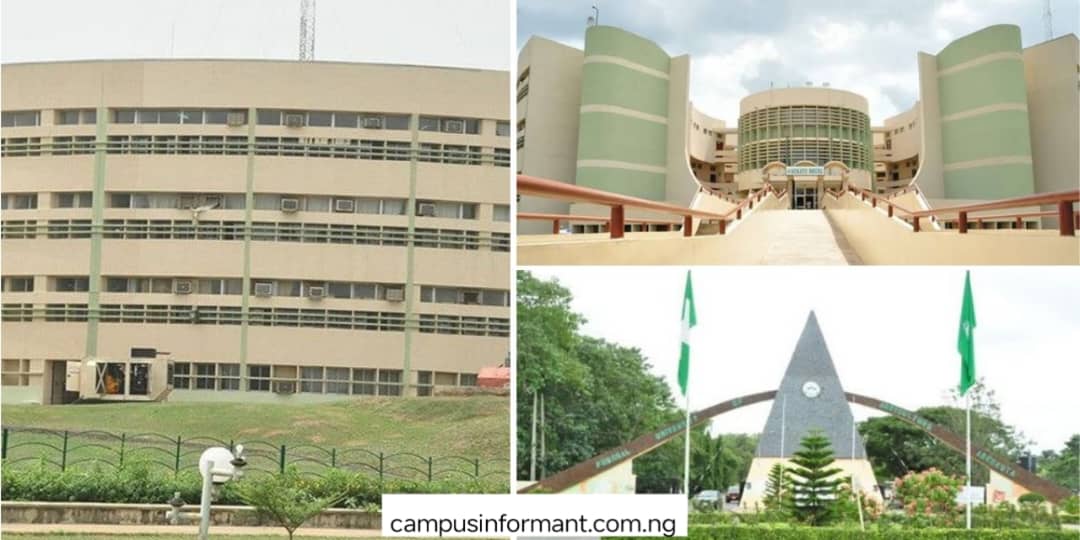
Coordination and academic oversight of educational activities of other campuses; The University started off from the old Campus of Abeokuta Grammar School, Isale-Igbein near the city centre. It completed its movement to its Permanent Site along Alabata Road in 1997, in what has been termed the fastest pace of Permanent Site development in the history of Nigerian University System.
Life at Federal University of Agriculture, Abeokuta
To identify the agricultural problems and needs of Nigeria and to find solutions to them within the context of overall national development. To provide and promote sound basic scientific training as a foundation for the development of agriculture and allied disciplines, taking into account indigenous culture, the need to enhance national unity, the need to vastly increase the practical content of student training, and adequate preparation of graduates of self employment in agriculture and allied professions. To promote and emphasize teaching, research and extension of agricultural knowledge including agricultural extension services and outreach progrmmes, in-service training continuing education and on-farm adaptive research. Directorate of Students’ Industrial Work Experience Scheme The Students’ Industrial Work Experience Scheme (SIWES) is an all-encompassing skills acquisition and training program that addresses the worrying gap between theory and practice exhibited by students of Universities, Polytechnics/Colleges of Technology/Colleges of Agriculture and Colleges of Education. The scheme is generally designed to expose students to and prepare them for the industrial work situations they are likely to meet after graduation. The scheme also affords students the opportunity of familiarizing and exposing themselves to the needed experience in handling equipment and machinery which are usually not available in their training Institutions. To empower students with adequate technical and allied skills for self-employment and effective participation in industrial development in Nigeria. The Directorate has the mandate to co-ordinate the acquisition of Relevant Production Skills (RPSs) of FUNAAB students and their Industrial Training, in order to bridge the gap between theoretical knowledge acquired in the classroom and actual practice in the industrial world. The Directorate operates as a link between FUNAAB, the National Universities Commission (NUC) as the SIWES Regulatory Agency, the SIWES Division of the Industrial Training Fund (ITF) as the Federal Government Parastatal charged with the Industrial Skills acquisition and funding responsibility; the Industries/organizations where the students are acquiring relevant skills and experience; and the students on Industrial Training. SIWES is presently recognized as the major avenue for bridging the gap between the theory acquired by students of tertiary institutions; and the industrial practice of various disciplines essential for the technological breakthrough and economic development of Nigeria.