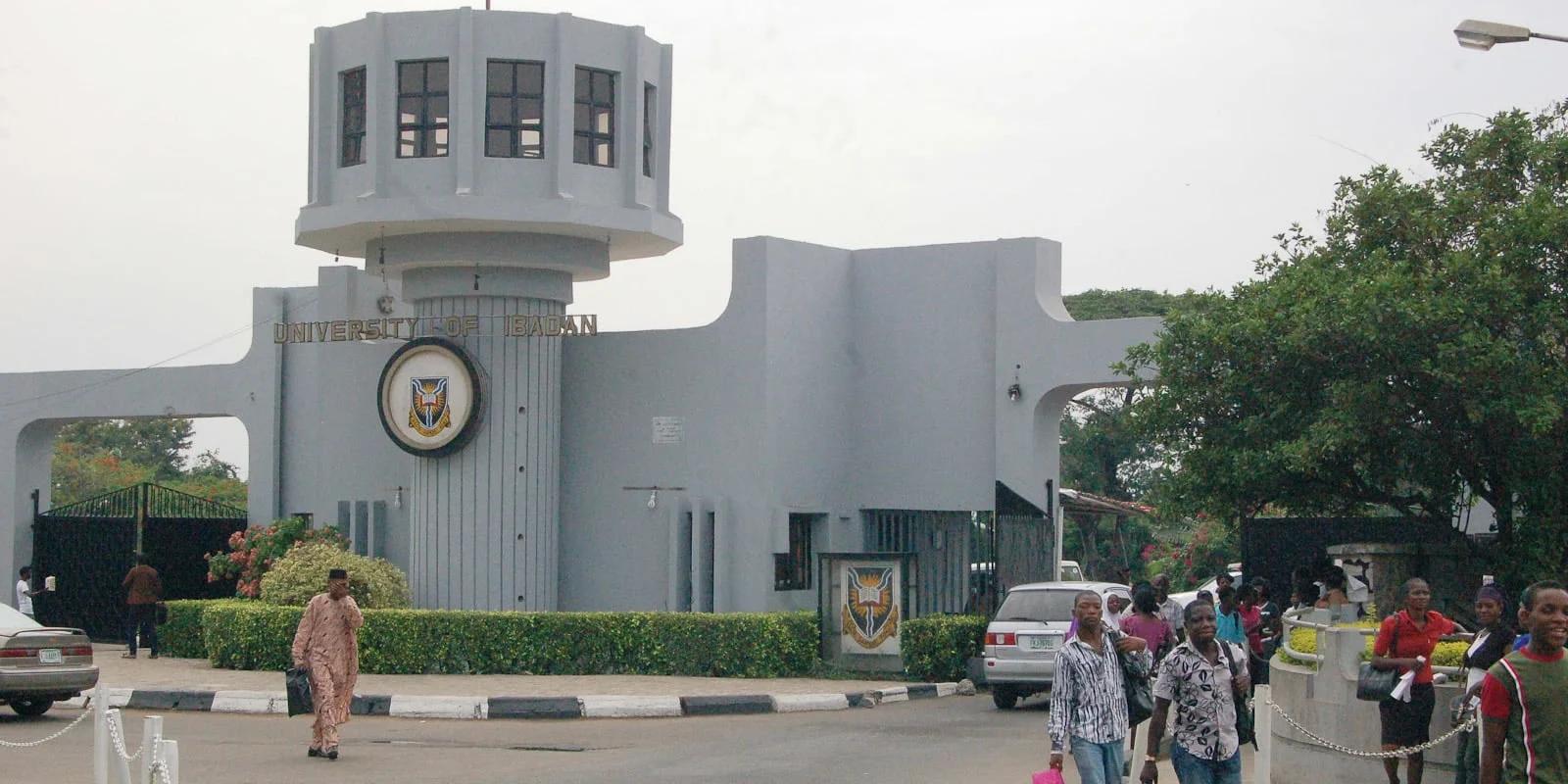
About University of Ibadan
The Story of University of Ibadan
Established in 1948, the University of Ibadan, UI as it is fondly referred to, is the first University in Nigeria. Until 1962 when it became a full-fledged independent University, it was a College of the University of London in a special relationship scheme. A plethora of literature as well as popular discourse exists on ethnic and religious relations in Nigeria. These existing works and rhetoric call attention to both the positive and negative manifestations of the intertwined phenomenon of ethnic and religious claims and the politics surrounding them. On the positive side, the works call our attention to some communal initiatives or interethnic/interreligious dialogues and networks as well as official national intervention projects aimed at promoting a healthy working relationship between peoples from different cultural backgrounds in various parts of Nigeria. The University of Ibadan (UI) is Nigeria’s oldest university, founded in 1948 as the University College, Ibadan (UCI). Its establishment marked a significant milestone in the country’s educational history, representing an effort to provide higher education on Nigerian soil rather than requiring students to travel abroad. Over subsequent decades UI became a central institution for learning, research and leadership in Nigeria and West Africa. The history of UI illustrates that establishing a credible higher education institution requires not just founding, but sustained investment, academic autonomy, and alignment with national priorities. Nigeria’s educational ambitions since independence have often depended on such pioneer institutions. You are indeed welcome to the website of the University of Ibadan, Nigeria. University of Ibadan is located at Ibadan, the capital of Oyo State in the South-Western part of Nigeria. UI, as the University is fondly referred to, owes its unique character to a combination of historical, geographical, cultural and architectural factors. Its history is a chronicle of the first citadel of higher education established in the country in 1948 as a college of the University of London. It became a full-fledged independent university in 1962, two years after the country's independence from Britain in 1960.
Academic Programs & Excellence
To expand the frontiers of knowledge through provision of excellent conditions for learning and research. Undergraduate Admission Postgraduate Admission Distance Learning Centre To expand the frontiers of knowledge through provision of excellent conditions for learning and research. After autonomy, UI expanded its faculties and programmes. It added faculties such as Agriculture, Forestry, Education, Social Sciences; brought in postgraduate courses; increased student enrolment; and developed research institutes. The library, teaching hospital (UCH, established in 1957), and other infrastructure grew. Established in 1948, the University of Ibadan, UI as it is fondly referred to, is the first University in Nigeria. Until 1962 when it became a full-fledged independent University, it was a College of the University of London in a special relationship scheme. The University, which took off with academic programmes in Arts, Science and Medicine, is now a comprehensive citadel of learning with academic programmes in sixteen Faculties namely, Arts, Science, Basic Medical Sciences, Clinical Sciences, Agriculture, the Social Sciences, Education, Veterinary Medicine, Pharmacy, Technology, Law, Public Health, Dentistry, Economics, Renewable Natural Resources and Environmental Design and Management. The University can boast of thousands of graduates who have proved themselves in the different sectors of the Nigerian economy and in the world at large. The University has the burden of history as the premier university in the country to continue to provide leadership in the creation and deployment of knowledge to development. Hence, its present vision goal of transforming into a postgraduate, research-driven university with focus on the development of basic and applied research capacity and skills-set towards meeting the growing needs of the tertiary institutions in the country, in particular, and other sectors of the economy, in general. strong postgraduate programmes and research training capacity with academic staff growing from the present capacity of 1,200 to about 1,800 with about 400 in the professorial cadre; strong linkages to the private sector through the promotion of market-driven research and the establishment of the proposed UI School of Business to address the needs of industry for human resources development; This post contains the Faculties and Departments at the Premier University of Ibadan (UI).
Campus & World-Class Facilities
Centre for African Peace and Conflict Resolution Rethinking& Managing Ethnic and Religious Relations in Contemporary Nigeria: Past Experiences, Present Challenges and New Directions 🏠 How accommodation works at UI On-campus hostels are allocated via the student portal after acceptance fee payment. Space is usually limited — fresh students get priority. Off-campus lodges are privately managed in nearby neighbourhoods, with rents typically paid yearly. Eni-Njoku Hall is one of the official on-campus hostels at University of Ibadan. Allocation is competitive and prioritis... Mariere Hall is one of the official on-campus hostels at University of Ibadan. Allocation is competitive and prioritises... Moremi Hall is one of the official on-campus hostels at University of Ibadan. Allocation is competitive and prioritises... Postgraduate Hall is one of the official on-campus hostels at University of Ibadan. Allocation is competitive and priori... Queen Amina Hall is one of the official on-campus hostels at University of Ibadan. Allocation is competitive and priorit... On-campus halls range from ₦20,000 – ₦80,000 per session. Off-campus self-contained rooms run from ₦200,000 – ₦600,000 per year depending on neighbourhood. Sharing reduces cost significantly. The Lodgings Unit of the Student Affairs Division is responsible for allocation of students to the Halls of Residence. The Unit ensures that the University Policy of total accommodation for fresh students is maintained while accommodation of the returning students is not neglected either. Also, the routine general secretariat administration of all the Halls of Residence is being co-ordinated by the Unit. In addition, it entertains students’ complaints on accommodation as well as off-campus accommodation matters. Provision of temporary accommodation to visiting students is another responsibility under the purview of the Lodgings Officer. Provide relevant information pertaining to matters on accommodation generally and off campus accommodation in particular. Search for suitable off-campus hostels and assist students to get affordable and conductive accommodation. Provide other services that will make Halls of Residence and hostels environmental friendly.
Life at University of Ibadan
To contribute to the transformation of society through creativity and innovation. To serve as a dynamic custodian of society's salutary values and thus sustain its integrity. The purpose of the conference is to take stock of the constantly changing nature ofethno-religious relations in Nigeria, examine the state of knowledge and understanding of the dynamics ofinter-ethnic/religious relations, assess best global practices for promoting peaceful co-existence, and articulate new or promising programmes and policies for managing Nigeria’s complex, diverse cultural and religious milieu withina democratic framework. Before 1948, Nigerians seeking university-level education went abroad. Secondary schools such as King’s College, Lagos; Government College, Umuahia; and others prepared students for overseas degrees. Locally, Yaba Higher College (established in 1932) provided post-secondary certificate courses, but none granted full degrees. Academic work began 18 January 1948, with 104 students entering three Faculties: Arts, Science, and Medicine. Degree programmes were under the University of London via a special relationship. The formal foundation‐stone ceremony for the permanent Ibadan site took place on 17 November 1948. Like many higher education institutions in post-colonial Africa, UI has faced challenges: funding constraints, political interference, brain drain, and periodic student unrest. However, it maintained high academic standards and became a key producer of graduates in many fields. Alumni include writers, scientists, public officials and scholars of regional and global standing. The University College, Ibadan was founded in 1948 with 104 students, three faculties, and under affiliation with the University of London. Kenneth Mellanby served as initial Principal. It became autonomous as University of Ibadan in 1962, with its own degree-granting powers. Over time it expanded academically and institutionally, withstanding political and economic challenges.
Under the guidance of Vice-Chancellor Prof. Kayode Adebowale, University of Ibadan continues to uphold its tradition of excellence.
Key Information
- School Type
- federal
- Curriculum
- Nigerian
- Levels Offered
- Undergraduate, Postgraduate
- Student Type
- Boarding & Day
- Gender
- Co-ed
Learn more about University of Ibadan from these trusted sources:
- 1
- 2
- 3
- 4
- 5
- 6
- 7
- 8
- 9